AI Grand Strategy Option 5: Innovation Ecosystem Dominance
All views in this newsletter are my own and do not represent the views of The R Street Institute, the US Navy, or any other organization I am affiliated with.
This is the sixth installment in the Grand Strategy for AI Competition series. The first piece examined why the "AI race" metaphor fails and introduced Kennan's grand strategy framework. The second outlined Preserve Democratic Technological Autonomy. The third examined Resilience Over Dominance. The fourth examined Competitive Pluralism. The fifth examined Technological Interdependence. This week: the first of the offensive approaches, and probably the one that will resonate the most with Americans.
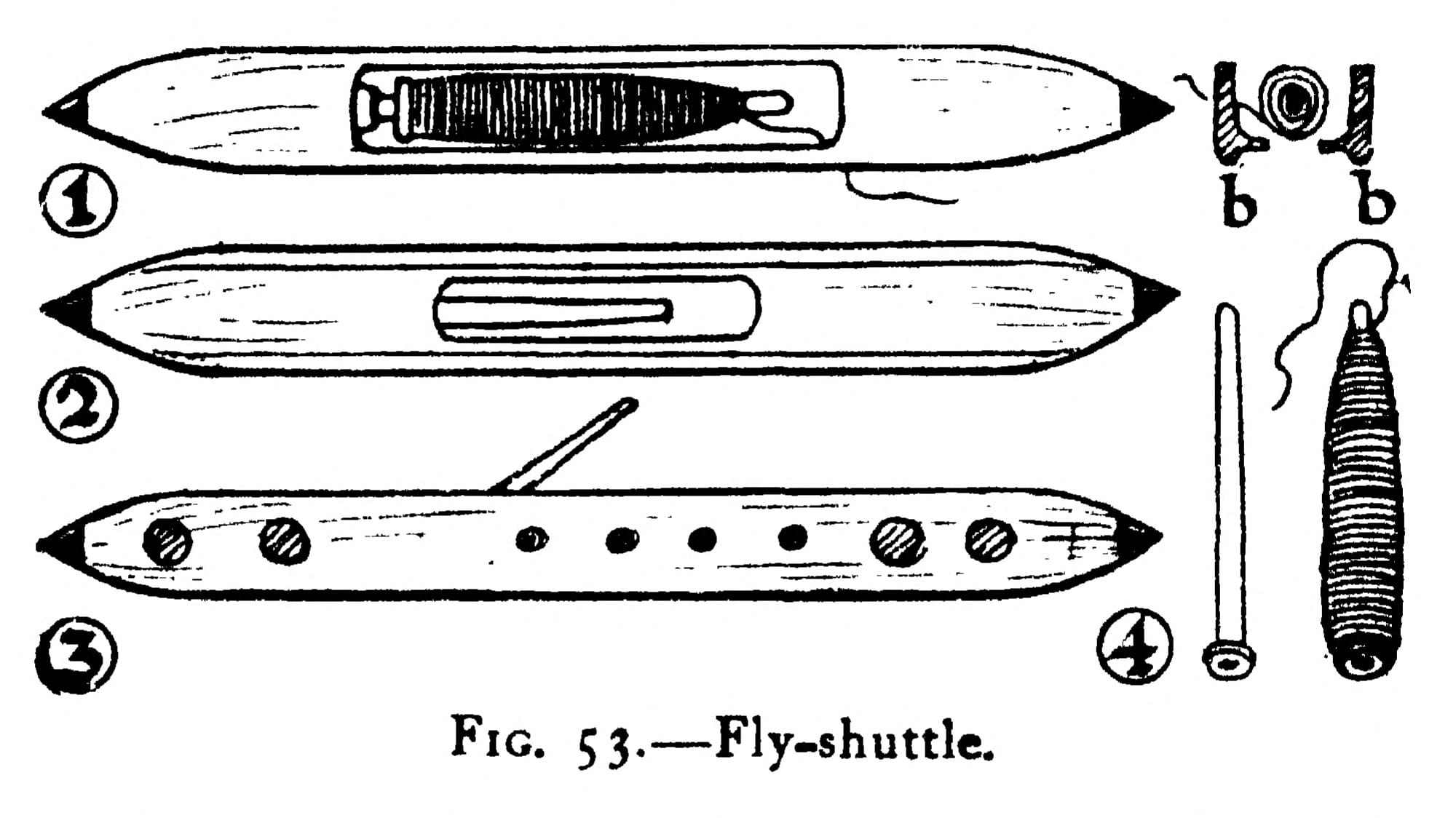
In 1733, a Lancashire weaver named John Kay invented the flying shuttle. It doubled the speed at which cloth could be woven. This innovation immediately created a problem: weavers were now consuming thread faster than spinners could produce it. That bottleneck led to further innovation as James Hargreaves invented the spinning jenny in 1764, which could spin eight threads simultaneously. The jenny created a new bottleneck: the thread it produced wasn't strong enough for warp. That problem summoned Richard Arkwright's water frame in 1769, which made strong thread that could be powered by water mills. Each solution generated the next problem. Each problem drew the next inventor.
Nobody planned this. There was no British Ministry of Textile Innovation, no national strategy for cloth manufacturing dominance. What existed in 18th-century Britain was something more durable and more difficult to replicate than a plan: a set of conditions that made invention economically rewarding, technically feasible, and socially legitimate. A patent system that let inventors capture returns from their work. Capital markets sophisticated enough to fund long-shot industrial ventures. Dense networks of craftsmen, mechanics, and entrepreneurs who could turn theoretical insight into working machinery. Most importantly, there was a culture that had decided practical invention was respectable work rather than mere trade.
The result was a self-generating cycle of innovation that ran for roughly a century and transformed not just Britain but every society it touched. The British Industrial Revolution wasn't a race that Britain won. It was an ecosystem Britain built, and then benefited from while everyone else was trying to catch up.
This is the historical logic behind Innovation Ecosystem Dominance as a grand strategy for AI competition.
The Ecosystem Argument
The previous four options in this series have all been, in different ways, concerned with managing or constraining the competition: containing Chinese AI development, building resilience to outlast competitors, balancing power among multiple actors, or creating interdependencies that make conflict costly. Innovation Ecosystem Dominance is the first approach that doesn't try to limit what China can do. It tries to build American advantages so generative that the competition becomes secondary.
The political objective is specific: make democratic AI ecosystems so valuable and so productive that restricting access to them becomes China's strategic problem rather than America's. Instead of denying capabilities to adversaries, the goal is creating capabilities so compounding that adversaries face an ever-widening gap they cannot close through their own effort alone.
The historical model isn't just Britain's Industrial Revolution. It's the American version of the same logic, which we built in the mid-20th century and have been partially dismantling ever since.
DARPA was created in 1958 after Sputnik demonstrated that technological surprise was possible. While the organization's accomplishments are spectacular, DARPA's most important contribution wasn't any specific technology. It was the innovation ecosystem it deliberately cultivated. J.C.R. Licklider, who ran DARPA's information processing office in the early 1960s funded not just research programs but the communities of researchers who would carry those programs forward for generations. The team he assembled, Doug Engelbart, Ivan Sutherland, Robert Taylor, Vint Cerf, Robert Kahn, and others, became the who's who of personal computing and the Internet. DARPA didn't invent the Internet so much as it created the conditions in which the Internet became inevitable. The research, the talent pools, the academic-industrial networks, the willingness to fund long-horizon work that no private firm could justify: all of it together constituted an ecosystem with compounding returns.
Britain's textile revolution and America's mid-century technology ecosystem share a structural feature that distinguishes them from capability-specific strategies. Their advantages weren't located in any particular invention or institution. They were distributed across thousands of interactions between inventors, financiers, craftsmen, researchers, and entrepreneurs. That distribution is what made them so difficult to replicate. You could steal the design of a spinning jenny. You couldn't steal the Lancashire ecosystem that made the jenny possible and would generate the water frame and the power loom after it.
The Uncomfortable Condition
Innovation Ecosystem Dominance has a requirement that sits uncomfortably against the grain of current American policy. Ecosystems require openness. Not unlimited openness, not naive openness to all actors and all risks, but the kind of openness that sustains the talent circulation, knowledge exchange, and cross-institutional collaboration that generates compound returns.
Britain's industrial ecosystem was remarkably open by the standards of its era. Foreign craftsmen came to learn and sometimes stayed to invent. British engineers went abroad and sometimes catalyzed industrial revolutions elsewhere. The recognition that the ecosystem's generative power depended on permeable boundaries was critical. The returns to the ecosystem's center exceeded what any individual participant could capture by closing off access.
The American innovation ecosystem at its peak had the same quality. The research universities that produced AI, the semiconductor industry, GPS, and the Internet were deliberately accessible to international talent. As the National Academies have noted, DARPA's strength came from creating "communities of researchers in both industry and academia" that crossed institutional and national lines. In this arrangement, permeability and sharing were by design and not considered vulnerabilities.
Current American policy is moving systematically in the opposite direction. Export controls restrict collaboration. Visa restrictions reduce talent inflows. Research security requirements create bureaucratic friction around international partnerships. While these measures address real concerns, the honest question for Innovation Ecosystem Dominance is whether they're solving a security problem while inadvertently degrading the ecosystem condition that actually generates sustained advantage.
China's restricted research environment offers an instructive inverse case. A 2025 Digital Science analysis of 24 years of global AI publications, covered by Science magazine, found that China now has the lowest rate of international collaboration among the major AI powers. This is a paradox worth unpacking: China has simultaneously become the top AI research collaborator for the US, UK, and EU while needing those relationships less than any of them needs China. The ecosystem is becoming asymmetric. Whether that has come from Western restrictions, Chinese government preferences, or both, the effect is the same: reduced cross-pollination from the country generating the most AI research volume. Innovation Ecosystem Dominance as a strategy reads this as a competitive signal, not just a data point.
What the Industrial Revolution Actually Tells Us
Economic historians who study why the Industrial Revolution happened in Britain rather than elsewhere point repeatedly to one insight: it paid to invent things in Britain in a way it didn't elsewhere. High wages made labor-saving machinery profitable. Cheap energy made running the machinery viable. A functioning patent system let inventors capture returns. Capital markets let investors fund the R&D. The ecosystem created the incentives, and the incentives drew the talent, and the talent generated the inventions, and the inventions created new problems that summoned new inventors.
What's striking about this account is what it says about France, which had comparable scientific capacity throughout this period and never experienced an industrial revolution of its own. French inventive culture was organized around government patronage and state-sponsored applications. Individual inventors seeking private returns from private markets had a harder time of it. The French state could produce specific technologies on demand. It couldn't produce the distributed, self-perpetuating innovation cycle that Lancashire generated without anyone being in charge of it.
The AI parallel is uncomfortable but direct. China's approach to AI innovation is substantially more French than British: centralized direction, state-backed champions, government-determined applications. The American approach, at least historically, has been substantially more British: distributed private effort, university research networks, venture capital, and a regulatory environment that let markets determine where innovation went. The question Innovation Ecosystem Dominance asks is whether current American policy is accidentally trading the British model for the French one at the exact time when the British model's advantages matter most.
The Strategic Logic and Its Limits
Innovation Ecosystem Dominance is the first of the offensive approaches in this series, but it's an offensive strategy with a passive engine. The British didn't direct the Industrial Revolution. They built the conditions and got out of the way. Lancashire generated the flying shuttle, the spinning jenny, and the water frame without a ministry coordinating any of it. That distributed, self-organizing quality is precisely what gave the ecosystem its compounding power, and precisely what makes this approach difficult to execute as a deliberate grand strategy rather than a description of what already happened. Where Preserve Democratic Technological Autonomy tries to prevent loss, and Competitive Pluralism tries to manage equilibrium, this approach tries to build an advantage so compounding that competitors are perpetually chasing rather than matching. The British didn't defeat the European textile competition by restricting their access to cloth. They built an ecosystem that produced better cloth faster than anyone else could match.
The honest problem with this strategy is time. The British Industrial Revolution's compounding advantages took decades to accumulate and were visible as dominant only in retrospect. The American DARPA ecosystem produced the Internet and GPS and much of modern AI, but those contributions emerged over 30 to 40 year timelines that no policy cycle is organized to sustain.
Innovation Ecosystem Dominance is also vulnerable to a version of the export control problem that I have examined before. If the strategy requires openness to generate ecosystem advantages, and the security environment requires restrictions that reduce openness, the strategy's core condition is in tension with the security environment it's supposed to address. This isn't a reason to dismiss the approach. It's a reason to take seriously what the strategy actually requires, rather than endorsing the label while pursuing policies that undermine the substance.
The deeper strategic question is whether the current moment, with AI advancing rapidly and policy moving fast in the direction of restriction and decoupling, still has the window open for an ecosystem strategy. Lancashire in 1733 had a century ahead of it. The question for AI is whether we're at 1733 or 1833.
What This Means For...
Policymakers: Innovation Ecosystem Dominance requires building conditions for compounding advantage, not just winning specific capability contests. The evidence-based question for any restriction or decoupling measure is whether it addresses a genuine security vulnerability or inadvertently degrades the ecosystem conditions that generate sustained advantage. The British Industrial Revolution didn't produce dominant textile industries because Britain restricted access to spinning jennies. It produced them because Britain built the ecosystem in which spinning jennies kept getting invented.
U.S. strategic competition: China's centralized approach to AI development produces specific capabilities on direction. The American distributed ecosystem approach, at its best, produces capabilities no one directed and advantages no one planned. That difference is a strategic asset, but only if the ecosystem conditions that generate it are maintained. Policies that move American AI development toward centralized direction trade away the comparative advantage most likely to produce durable superiority.
Tech companies: The industrial ecosystem Britain built in the 18th century required both the inventors and the conditions that made invention worth doing: property rights, capital access, market signals. The American AI ecosystem requires the same. Companies that engage with research universities, support open publication, and advocate for talent mobility are maintaining ecosystem conditions that benefit the whole, not just performing goodwill. Companies that capture talent and knowledge inside proprietary silos degrade the distributed network that makes the ecosystem generative.
Aspiring strategic thinkers: The British Industrial Revolution is one of the few historical cases where a nation achieved a genuinely compounding strategic advantage that lasted for generations. It happened not through a plan but through conditions. The lesson for AI competition is that the question "how do we win this race" may be the wrong frame. The more durable question is "what conditions produce the kind of innovation that keeps generating advantage" and whether current policy is building or degrading those conditions.