AI Grand Strategy Option 2: Resilience Over Dominance
All views in this newsletter are my own and do not represent the views of The R Street Institute, the US Navy, or any other organization I am affiliated with.
This is the third installment in the Grand Strategy for AI Competition series. The first installment examined why the "AI race" metaphor fails and what Kennan's containment teaches us about grand strategy. The second explored "Preserve Democratic Technological Autonomy" as a defensive approach. This week: a grand strategy built on the ability to absorb shocks and adapt faster than your competitors.
This week we're continuing with our exploration of possible grand strategies by staying in the defensive realm and focusing on fostering resilience rather than striving for dominance in AI.
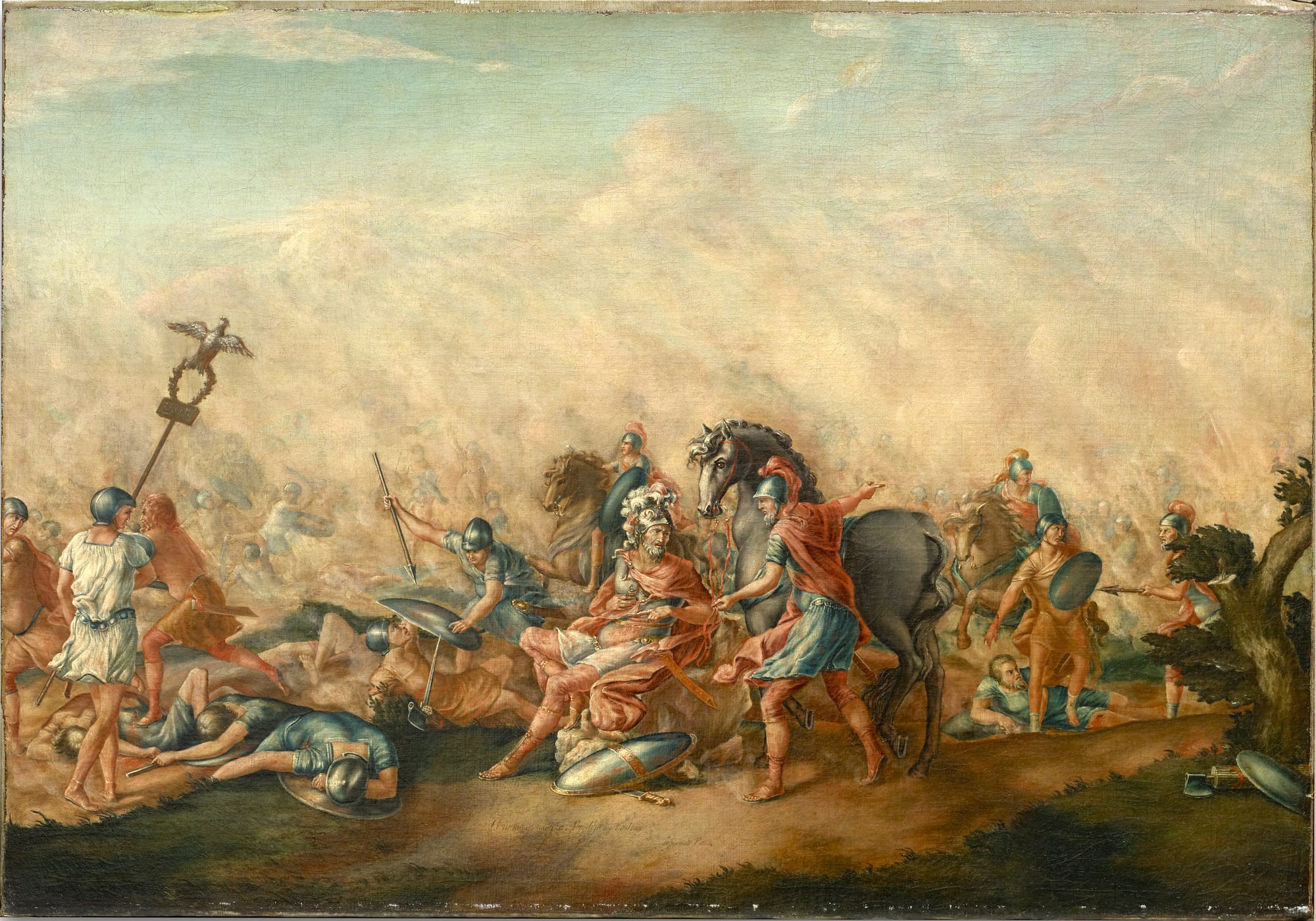
On August 2, 216 BC, Rome suffered the worst single-day military disaster in its history. At Cannae, Hannibal Barca's army killed somewhere between 50,000 and 70,000 Roman soldiers in a single afternoon. To put that in perspective, the Roman Republic lost roughly 20 percent of its entire military force in one battle. The historian Adrian Goldsworthy compared it to the British casualties on the first day of the Somme. It was an exceptionally bad day for the Roman Empire.
After that day, any reasonable observer would have concluded that Rome was finished. Carthage had the greatest military commander of the ancient world and Rome had just lost an army. The smart money was on Hannibal.
The smart money was wrong.
Rome did something after Cannae that Carthage never could. It adapted. The Senate refused Hannibal's offer to ransom prisoners. It lowered the draft age, enlisted slaves, and raised two new legions almost immediately. More importantly, Rome fundamentally rethought its approach to the war. The Republic abandoned the direct confrontations that Hannibal kept winning and adopted the Fabian strategy of attrition and patience that everyone had mocked just months earlier. Roman commanders studied Hannibal's tactics, absorbed them, and eventually turned them against Carthage itself. At the Battle of Zama fourteen years later, Scipio used Hannibal's own encirclement tactics to defeat him decisively.
Hannibal was brilliant. Arguably the finest tactical commander in ancient history. But brilliance is not the same thing as resilience. Carthage could produce one Hannibal. Rome could lose at Cannae and come back stronger. The republic's institutional capacity to absorb catastrophic failure and adapt its approach proved more strategically valuable than any individual battlefield advantage.
This is the second grand strategy alternative worth examining for AI competition: Resilience Over Dominance. Leading the AI race at every moment is not of paramount importance. Instead, building the institutional capacity to absorb setbacks, learn from them, and adapt faster than competitors over decades is the key to this approach.
The Adaptation Advantage
The Rome-Carthage dynamic illustrates something that gets lost in most discussions about AI competition. We obsess over who is ahead right now and fret about the possibility of falling behind. Who has the best model? Who spent the most on compute? Who can access what chips? Who published the most impressive benchmark? This is the equivalent of scoring the Battle of Cannae and declaring the war over.
The more important strategic question is: which system can adapt faster when reality changes?
The Cold War provides an even clearer illustration. By the early 1970s, the Soviet Union was a genuine technological competitor with the United States. Soviet achievements in space, nuclear physics, and military technology were real and impressive. The two systems appeared roughly comparable.
Then the information revolution happened and the Soviet system couldn't adapt.
The problem wasn't that Soviet scientists were less talented or that the Kremlin spent less on technology. The Soviet Union even started with a lead in the "personal computing race." Joseph Nye noted that in 1985, the Soviet Union had 50,000 personal computers while the United States had 30 million. Four years later, the Soviets had 400,000 and the Americans had 40 million. The lack of adaptability in the Soviet system made it unable to compete with the Americans.
This failure came about because centralized planning proved structurally incapable of responding to a technological revolution that required decentralized experimentation, rapid iteration, and tolerance for failure (modern policymakers advocating for industrial policy take note). Stalin had built an economy that was, as Nye put it, "all thumbs and no fingers." It could pour steel and build missiles through brute-force direction, but it couldn't reorganize itself when the rules of competition changed. By the late 1980s, only 8 percent of Soviet industry was globally competitive. You cannot remain a superpower when global markets don't want 92 percent of what you produce.
The American system won the Cold War's technological competition not because it was always ahead and maintained a lead. It won because it could adapt when it fell behind. Sputnik terrified America in 1957. Within twelve years, Americans were walking on the moon. Coming from behind to win shows resilience more than dominance.
Applying the Framework to AI Competition
Here's where this gets uncomfortable for American policymakers. In January 2025, a Chinese AI startup called DeepSeek released an open-source reasoning model that matched or approached the performance of the best American systems at a fraction of the cost. Marc Andreessen called it a "Sputnik moment."DeepSeek's free app overtook ChatGPT on the App Store within days, built with chips our own export controls had deemed sufficiently restricted. The panic was palpable.
One year later, the picture has only intensified. Chinese open-source models now account for 30 percent of global AI downloads, surpassing the United States at 15.7 percent. Companies like DeepSeek, Moonshot AI, and MiniMax are not just catching up. They've built an entire open-source ecosystem that is pulling developers worldwide into their orbit. DeepSeek's V4 model is expected imminently, and every indication suggests it will intensify competitive pressure further.
This could be our Cannae moment. DeepSeek does not represent a fatal blow, but is a strategic shock that should force fundamental reassessment. The question is whether we respond like Rome or like every other ancient power that suffered a catastrophic defeat and never recovered.
A Resilience Over Dominance strategy would respond to the DeepSeek shock not with panic about "losing the race" but with the institutional confidence to adapt. It would ask: What did DeepSeek reveal about our strategic approach that needs to change? How do we absorb this lesson and come back stronger? What systemic advantages do we have that enable faster adaptation over time?
The answers are actually encouraging. American innovation ecosystems have the decentralized, failure-tolerant structure that the Soviet Union lacked. Academic research institutions, venture capital markets, open labor markets, and immigration pipelines all contribute to adaptive capacity. The problem is that policy and regulatory approaches often work against these advantages rather than leveraging them. Export controls push competitors toward the very self-sufficiency we want to prevent. Regulatory fragmentation between federal and state levels creates friction that slows adaptation. Immigration restrictions limit the sources of talent that fuel the innovation ecosystem.
A resilience strategy would prioritize maintaining these adaptive advantages over achieving dominance at any single point in time.
Evaluating Against Grand Strategy Criteria
In the series introduction, I outlined five criteria derived from containment's success for evaluating any proposed AI grand strategy. Here's how Resilience Over Dominance measures up.
Clear Political Objective. The political objective is straightforward: maintain the institutional capacity to adapt to technological change faster than competitors, regardless of who leads at any given moment. This is more modest than "win the AI race" but more sustainable and more honest about how technological competition actually works. Success looks like an American innovation ecosystem that absorbs shocks like DeepSeek and responds with renewed competitive energy, not one that leads every benchmark but shatters when surprised.
Institutional Alignment. This is where the strategy excels. Resilience leverages exactly what democratic systems do well: decentralized experimentation, tolerance for failure, rapid reallocation of resources through market mechanisms, and the free flow of talent and ideas. Rome's adaptability after Cannae came from institutional depth, not individual genius. The American innovation ecosystem has similar institutional depth if we stop undermining it through policies designed to achieve centralized control of a decentralized process.
Sustainability Over Decades. A resilience strategy is inherently sustainable because it doesn't require permanent crisis mobilization. It doesn't demand that we "win" every quarter. It asks for something more achievable: maintaining the conditions that enable rapid adaptation. This is the Fabian strategy applied to technology competition. It is patient, it is disciplined, and it drives the people who want dramatic action absolutely insane. Just as it did in ancient Rome.
Coordination Mechanisms. This is the strategy's relative weakness. Resilience requires less coordination than some alternatives, since it relies on distributed adaptation rather than centralized direction. But it still needs policy coherence. Immigration policy, research funding, regulatory frameworks, and trade policy all need to point in the same direction: maintaining adaptive capacity. Currently, they often work at cross-purposes.
Adaptive Resilience. Almost by definition, this criterion is the strategy's greatest strength. A strategy built on adaptation is inherently more resilient to surprise than one built on maintaining a specific position. When DeepSeek changed the landscape, a dominance strategy panics. A resilience strategy says: good, now we learn and adapt.
The Uncomfortable Truth
There's a reason this strategy is difficult to sell politically. It requires accepting that we won't always be ahead. It means tolerating the anxiety of watching competitors achieve temporary advantages without treating every advance as an existential crisis. Fabius Maximus was called "the Delayer" as an insult. The Roman public wanted decisive action, not patient adaptation. They got Cannae instead.
The parallel to today's AI discourse is hard to miss. Every new Chinese AI advance triggers calls for massive government spending, emergency regulation, or dramatic policy action. The impulse is to match the perceived threat with equivalent force. This is exactly the frontal assault mentality that Rome had to abandon after Cannae.
The Soviet Union's collapse offers the cautionary tale from the other direction. The Kremlin tried to match American technological competition through centralized direction and brute-force investment. It worked for a while. Then the nature of technological competition changed, and their system couldn't change with it. China's current AI strategy, for all its impressive achievements, relies on significant state direction and coordination. That approach has real advantages in the short term. Whether it can sustain the kind of iterative, failure-tolerant adaptation that characterizes breakthrough innovation over decades is the strategic question that matters.
Rome didn't win the Second Punic War because it had better generals than Hannibal. It won because its institutions could survive bad generals and catastrophic defeats and come back with better approaches. That's the kind of strategic advantage worth building.
What This Means For...
Policymakers: Stop treating every competitive setback as evidence that we need a centralized AI strategy. DeepSeek should prompt adaptation, not panic. Focus policy on maintaining the conditions that enable resilience: open immigration for AI talent, flexible regulatory frameworks that don't calcify faster than the technology changes, and research funding that tolerates failure. The Fabian strategy is unappealing precisely because it works through patience rather than dramatic action.
U.S. strategic competition: Our systemic advantage in AI competition is not any specific capability but the institutional capacity to adapt when the landscape shifts. Current policy often undermines this advantage by attempting centralized direction of a fundamentally decentralized innovation process. The Soviet Union tried to compete with the American technology ecosystem through state planning. It failed not because Soviet scientists were inferior, but because the system couldn't adapt.
Tech companies: Resilience strategy validates building for adaptability rather than optimizing for any single competitive benchmark. Companies that can pivot rapidly when the technological landscape shifts will outlast those optimized for current conditions. DeepSeek's rise rewarded efficiency and open-source approaches that many Western companies had dismissed. The companies that adapted fastest to that shift are now better positioned than those still defending previous assumptions.
Aspiring strategic thinkers: Rome's response to Cannae remains one of history's great studies in institutional resilience. The republic lost 20 percent of its military in a day, watched 40 percent of its allies defect, and faced the greatest military commander of the age. It won anyway, because institutional adaptability proved more strategically durable than individual brilliance. The uncomfortable corollary: building resilience requires accepting that you'll sometimes lose. The Fabian strategy works, but it demands the strategic patience to let it.